7 Ways to Use AI Without Letting It Do the Thinking 🤖🧠
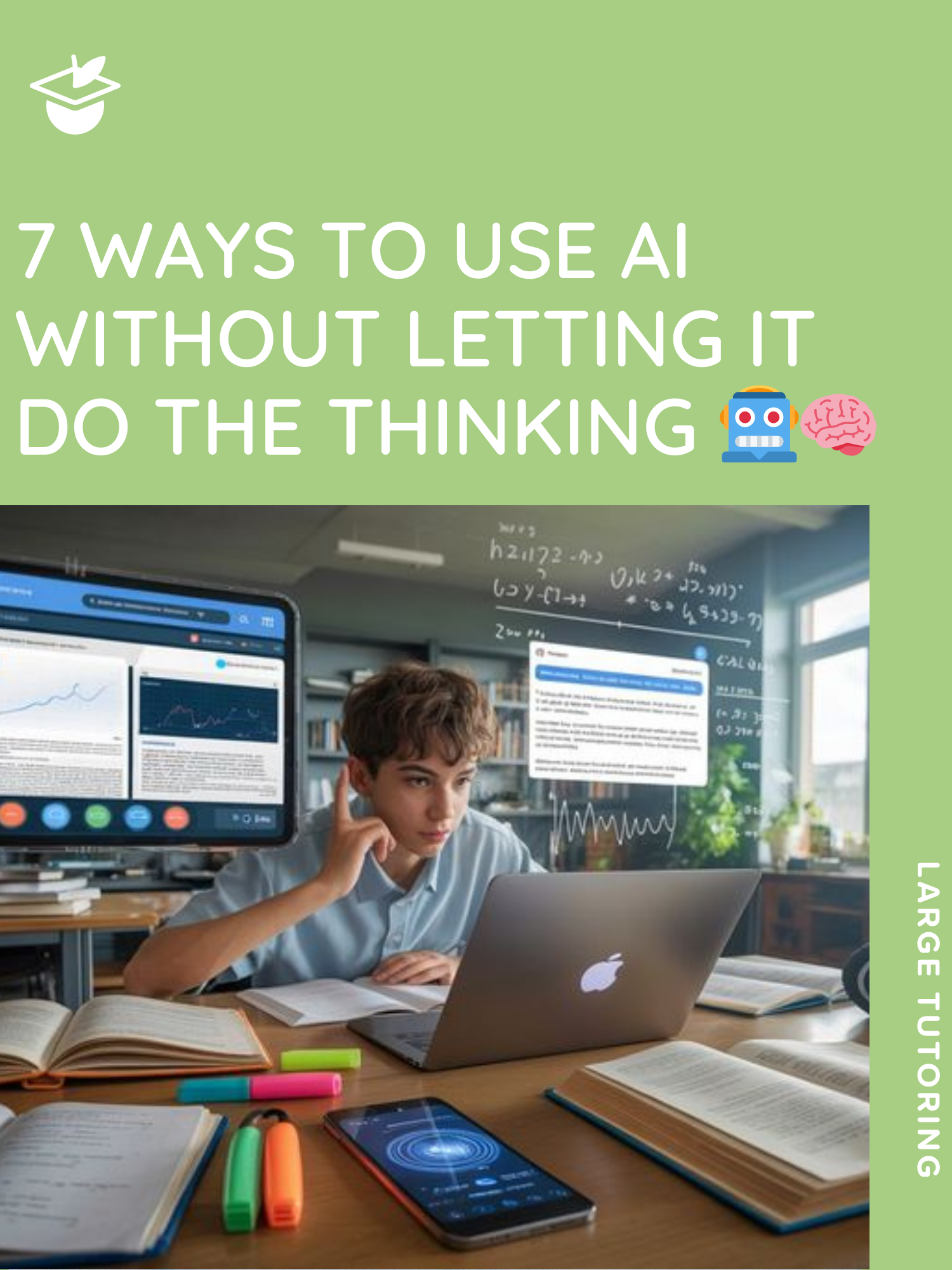
AI tools are becoming a normal part of school life. Students use them to explain concepts, organize notes, and sometimes—without even realizing it—to avoid doing the thinking themselves. Parents, meanwhile, are often wondering: Is AI actually helping my child learn… or just helping them finish faster?
The truth is, AI isn’t good or bad on its own. Like calculators, Google, or spellcheck, it’s simply a tool. When used thoughtfully, AI can support effective learning.Here are 7 smart, realistic ways students can use AI for school—without letting it take over the thinking.
1️⃣ Use AI to Catch the Confusion You Didn’t Know You Had ✏️💡
A lot of students think they understand a lesson… until they sit down to do homework and suddenly feel like the teacher was speaking another language 😅. Here is how AI can be a great help in moments like this
Ask AI to explain a concept in a different way so students can uncover the exact part that didn’t click in class. This can help students identify gaps in their understanding for better results. That “Ohhh, that’s what I missed” moment is important—it means real learning is happening. Used this way, AI supports understanding instead of replacing effort
2️⃣ Use AI to Reveal Weak Spots (Instead of Avoiding Them) 🎯🧠
Students often start with material they know well, and from that foundation, it is encouraged that they intentionally step into more challenging areas where real progress unfolds.
Using AI to generate practice questions or quizzes helps engage students in active learning and leads to a more solid understanding of concepts. Additionally, when students see the same mistake showing up again and again, it pinpoints exactly what they still need to work on and where their focus should go. This makes study time more efficient and far more effective—especially when students are learning how to use AI for school without relying on it for answers.
3️⃣ Think First. Then Let AI React. Not the Other Way Around. ✅
One simple habit makes all the difference: order matters.
When students attempt a problem first—even if they’re unsure—they activate their own thinking. When AI steps in afterward to explain mistakes or confirm reasoning, the feedback sticks much better. Jumping straight to AI answers may feel productive, but it often leads to that familiar situation where everything makes sense… until the test 😬.
4️⃣ Use AI Examples to Learn the Pattern, Not Copy the Steps 📘✨
Examples can be incredibly helpful when students understand a concept but struggle to apply it. Using AI to show sample problems, model paragraphs, or worked explanations can help bring ideas together and lead to improved understanding.
The learning happens when students pause and ask: Why did this approach work? What stayed the same? Which step mattered most? Copying saves time in the moment, but understanding saves stress later—especially in subjects that build on earlier material.
5️⃣ Let AI Help Your Brain Stay Organized 🗂️🧠
Sometimes the biggest challenge isn’t the work itself—it’s knowing where to start. When assignments feel overwhelming, AI can help students organize their thoughts, break tasks into manageable steps, or create a simple study plan.
This doesn’t mean AI is doing the work. It simply turns “I don’t even know where to begin” into “Okay, I can start here.” For many students, that’s the hardest part.
6️⃣ Be Honest About How You’re Using AI 🤝📱
AI works best when students are honest—with teachers, parents, and themselves. Understanding what’s allowed and why those boundaries exist helps students use AI responsibly.
Parents don’t need to interrogate. Simple, low-pressure questions like “What did AI help you with?” or “Could you explain this without it?” encourage reflection without making AI feel forbidden or scary. These conversations help build healthy habits around AI and learning for students.
7️⃣ Remember: Learning Is Supposed to Feel a Little Uncomfortable 🌱💭
It is natural for learning to feel slightly uncomfortable at times, as meaningful growth often requires us to step beyond what is familiar. Confusion, mistakes, and effort are signs that the brain is working. AI should reduce unnecessary frustration—not erase every challenge. When students work through difficulty with the right support, they build confidence that lasts far longer than any shortcut.
🎓 Conclusion
AI doesn’t replace thinking—it amplifies the habits that are already there. When students use AI thoughtfully, it can help them clarify confusion, focus their study time, and feel more confident tackling challenging material. When used as a shortcut, it often hides gaps in understanding and makes learning harder in the long run.
At Large Tutoring, we help students build strong learning skills while navigating modern tools like AI responsibly. Our goal isn’t just to help students finish assignments—it’s to help them truly understand what they’re learning and grow into confident, independent learners.
If this topic resonated, you may also enjoy reading 7 Takeaways from the Future of AI Panel for a broader look at how AI is shaping education, and 5 Ways to Stop Getting Distracted by Your Phone While Studying for practical strategies to stay focused in today’s digital world. With the right guidance and habits in place, AI can be a helpful support—not a replacement—for real learning 🤖📘✨.
Whether you're a student tackling math, calculus, biology, chemistry, physics, English, or French, our expert tutors are ready to help you succeed!
Looking for extra support? Book a lesson today! Have questions or thoughts on this post? We’d love to hear from you! Reach out here or via email hello@largetutoring.com
And don’t forget to check out our list of amazing tutors—your perfect match might be waiting! 🚀